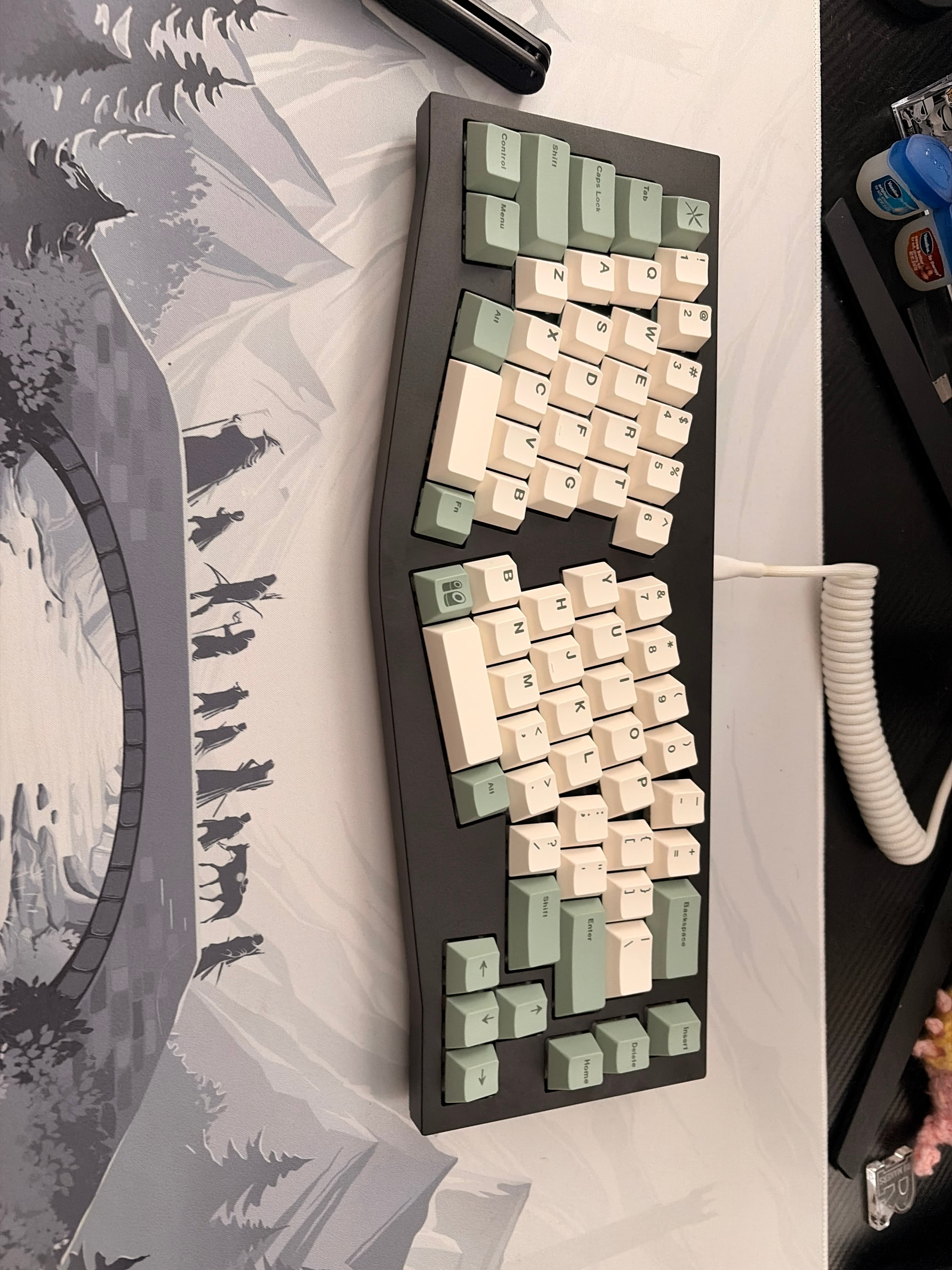
What Is a Thocky Keyboard? Meaning, Sound and How to Get One
Updated
A thocky keyboard makes a deep, rounded, low-pitched sound each time a key bottoms out: a muffled thock rather than a sharp clack. No single part makes a board thocky. It comes from how the keycaps, switches, plate, case and dampening work together, which is why two keyboards with the same switches can sound completely different.
What does a thocky keyboard sound like?
Think of the difference between tapping a thick wooden table and tapping a hollow plastic box. Thock is the first one: the energy of each keystroke lands in the low frequencies, decays quickly, and has little ring or echo. A clacky keyboard sits higher, sharper and brighter. A creamy keyboard is about texture rather than pitch: smooth and soft, with no scratch or rattle.
People often use "thocky" loosely for any keyboard that sounds good. On RateMyKeyboard it's one of several sound descriptors the community votes on, so it means specifically that listeners heard a deep, full-bodied sound.
What makes a keyboard thocky?
Keycaps
Keycaps are the part your finger hits and one of the biggest influences on pitch. Thicker walls and denser plastic push the sound lower; thin keycaps sound higher and clackier. That's a big reason thick PBT sets are popular in thocky builds. More in do keycaps affect sound. Profile matters too: taller sculpted profiles tend to sound fuller than flat, low ones.
Case and dampening
A hollow case acts like a speaker cabinet and adds ping and echo. Heavier, stiffer cases and filling the empty space under the PCB (case foam) cut the high-frequency ring so the low end is what you hear. This is the cheapest way to make a hollow-sounding board deeper. See does the case affect sound.
Plate and mounting style
The plate holds the switches and passes each bottom-out into the rest of the board. Stiff metal plates give a sharper, more defined sound, while softer plates such as polycarbonate or POM tend toward a more muted one. Flexible mounting styles like gasket mount isolate the plate from the case, which usually softens the sound. The data block above shows which plates and mounts are most common on builds the community actually voted thocky. For the details, see plate materials and mounting styles.
Switches
Switch housing material changes the pitch of each press. Nylon housings are generally described as deeper and more muted, polycarbonate as brighter and clearer. Lubing switches removes scratch and spring ping, which lets the deeper part of the sound come through. Linear or lightly tactile switches are common in thocky builds, but switch type alone doesn't decide it.
Stabilizers
A rattling spacebar or Enter key will ruin an otherwise thocky board. Clipped, lubed and well-tuned stabilizers keep the big keys sounding like the rest.
How to make your keyboard thockier
Roughly in order from cheapest and easiest to most involved:
- Put a desk mat under it. A soft surface absorbs some of the high end for free.
- Tune the stabilizers. Lube the wires and housings to kill rattle.
- Swap to thicker keycaps. Thick PBT keycaps are one of the most noticeable changes you can make.
- Add dampening. Case foam fills hollow space; the tape mod (a few layers of tape on the back of the PCB) is popular for a deeper, poppier sound.
- Change or lube the switches. On a hot-swap board this takes an evening; on a soldered board it's a bigger job.
Change one thing at a time and record a few seconds of typing before and after, so you can tell what actually helped.
Thocky vs creamy vs clacky
| Descriptor | What you hear | Usually associated with |
|---|---|---|
| Thocky | Deep, low, rounded | Thick keycaps, dampened case, softer plate |
| Creamy | Smooth, soft, even | Lubed linear switches, tuned stabilizers |
| Clacky | Sharp, high, bright | Thin keycaps, stiff plate, hollow case |
These aren't opposites. Many of the best-rated keyboards on the site are voted both thocky and creamy. Compare them in thocky vs creamy and thocky vs clacky.
Are thocky keyboards better?
Not objectively. Sound is a preference, and a thocky keyboard types and games exactly as well as the switches inside it. What thock does have going for it is that low-pitched sound tends to be less fatiguing to listen to, and less piercing to the people around you, than a high clack at the same volume.
Frequently asked questions
What does thocky mean?
Thocky describes a keyboard sound that is deep, rounded and low-pitched, like a muffled “thock” rather than a sharp “clack”. It comes from the combination of switches, keycaps, plate, case and dampening, not from any single part.
Are thocky keyboards loud?
They can be, but they read as quieter than they are because the sound sits in lower frequencies. A thocky board is usually less fatiguing to listen to than a clacky one at the same volume.
Can linear switches be thocky?
Yes. Plenty of thocky builds use linear switches, paired with thick keycaps and a dampened case. Switch type alone doesn't make a board thocky; the case, plate and keycaps shape the pitch just as much.
Are thocky keyboards good for gaming?
Sound doesn't affect performance, so a thocky keyboard is as good for gaming as the switches inside it. Many thocky builds use smooth linears, which are popular for gaming anyway.
What's the difference between thocky and creamy?
Thocky is about pitch: deep and low. Creamy is about texture: smooth, soft and even, with no scratch or rattle. A board can be both, and many of the best-rated builds are.
Is my keyboard thocky?
Record a few seconds of typing and upload it to RateMyKeyboard. The community votes on sound descriptors like Thocky, Creamy and Clacky, so you get an answer from real listeners rather than guessing.